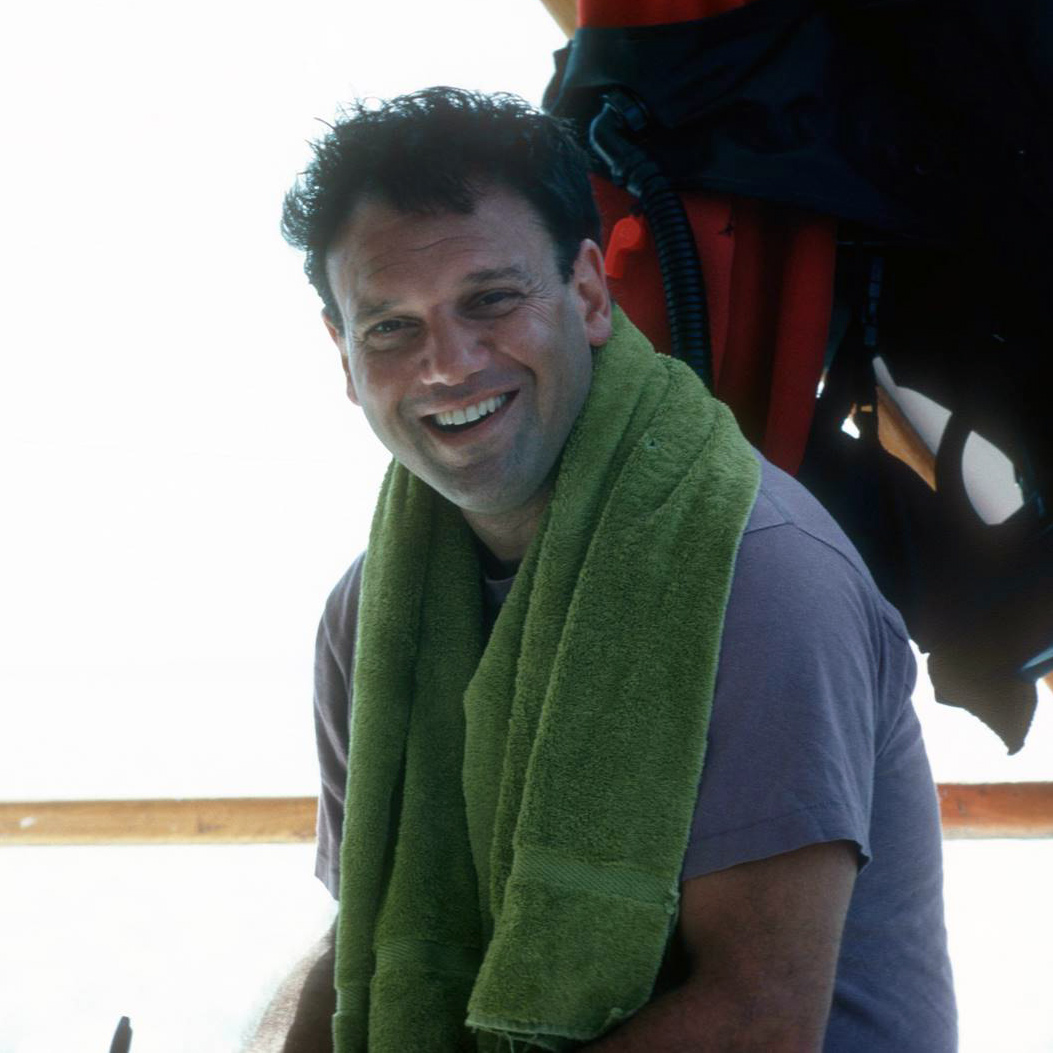
About Steve Coren

Steve Coren is an attorney and award winning underwater photographer living in Needham, Massachusetts.  Steve graduated University of Pennsylvania in 1966 and Boston University Law in 1969. He is a founder and equity owner/partner in the law firm of Kerstein Coren & Lichtenstein LLP in Wellesley, Massachusetts where he specializes in civil litigation, including personal injury, probate litigation, divorce and HIPAA/breach of privacy violations.  Steve is on the Board of Governors of the Massachusetts Academy of Trial Attorneys and is a certified Conciliator for the  Middlesex and Norfolk Probate and Family Courts. He is a lecturer at seminars in the fields of civil litigation and divorce. He is a presenter on panels with the Massachusetts Continuing Legal Education on the subjects of trial procedure and handling evidence and the Family Law Institute, and also presents on behalf of the Metrowest Legal Services Divorce Training seminars.

Steve began scuba diving in 1970 and became a certified PADI-YMCA scuba instructor in Massachusetts in 1976. He then became a member of the PADI scuba instructor institute where he participated as a instructor in instruction certification institutes. Steve was a Board Member of the Massachusetts Board of Underwater Archaeological Resources from 1985 – 1989, which held agency hearings on permitting archaeological and economic excavations of sunken ships in Massachusetts waters.

Steve was employed part-time by the New England Aquarium between 1972 and 1989. Steve dove in the Giant Ocean Tank, a 23 foot deep tank where he fed the fish, sharks, barracuda, turtles and eels, cleaned the tank, tended to wounded animals, gave tours and helped rescue stranded mammals and turtles.

Steve has traveled to a variety of pristine diving areas all over the world including the Turks and Caicos Islands, Bonaire, Belize, Cozumel, St Lucia and the Florida Keys.  He began his underwater photography in 1988. He has traveled on a number of dive photography trips where he lived on a ship and made frequent day time and night dives for a number of years. His favorite areas are the Egyptian Red Sea and the Solomon Islands in the South Pacific. His photographs have won a number of awards from juried competitions.

Steve is the author of The Law and the Diving Professional, published by PADI, Santa Ana, California. It was published in 1985 and over 50,000 units have been sold internationally. It is a required reference for PADI instructors.

Steve represents many diving organizations, including the Bay State Council of Divers. He has successfully opposed, on behalf of the Council, laws and procedures passed and used by coastal communities in Massachusetts which sought to restrict scuba diver access and activity in coastal ocean waters.

Featured Photos

Egyptian Red Sea

Solomon Islands

Diving Stories

H.M.S. Thistlegorm

The Thistlegorm story starts at the Yards of J. L. Thompson and sons at Sunderland, for the Albyn Line. It was here that the 4898 ton, 415ft, cargo ship was built in 1940. She was driven by a triple expansion stream engine, built by North East Marine Engineering, which could deliver some 1850 hp driving her along at a speed of 10 knots.
She was one of a number of “Thistle” ships owned and operated by the Albyn Line. Each vessel carried the emblem of Scotland, the thistle, which formed the prefix of each vessels name followed by a Gaelic word; Thistledhu,Thistlegorm, Thistleglen and Thistlenuir.
Soon after completion she was quickly requisitioned by the navy for allied WW2 duties and armed with the guns which she still carries today – world war one vintage guns in fact. By September of 1941 she had completed three successful voyages (America, Argentina and the Dutch Antilles). Her next however, was to be her last.

U-Boat 853

One of the more interesting dive sites is on U=boat U-853. This submarine lies in approximately 120 of water about 8 miles east of Block Island, Rhode Island and is a well-known site for advanced divers. U-853, a Type IXC/40 submarine, was constructed in 1942 and saw action in the Battle of the Atlantic. She sank almost 6000 tons of allied shipping. In February 1945, she was sent to the Easy =coast of the United ad States to harass American shipping. On May 5, 1945, Commander-in-Chief of the Navy. Karl Dönitz, recalled all U&-boats to return to their bases. However, U-853 either did not receive the message or possibly ignored it.

Solomon Islands

Some of the best diving in the world is in the South Pacific. Destinations such as the Solomon Islands, the Philippines and Indonesia contain some of the lushest most dense coral reef systems found anywhere. Their reefs teem with sea creatures of all sizes and shapes and framed by gorgeous coral reefs.
For those who have some knowledge of World War Two history in the Pacific, the Solomon Islands were the focus of major land and sea battles between 1942 and 1943. Guadalcanal, the main island, evokes horrific memories of bloody battles as the US strove to eject the Japanese from Guadalcanal in order to capture the airport, called Cactus Field. This was the only island in the Solomon’s that contained the ability to handle large and constant air traffic. There’ve were smaller airports such as on New Georgia Island, but Cactus Field was the largest and most important in terms of depriving the Japanese of a significant air base and securing the base for American troops and materials to move westward. It was part of the plan for the US to hop-scotcvh its way westward form island to island to eventually press a large-scale attack of the Japanese mainland. The Solomons form parallel arms of three islands. In WWII, the sea between these two arms was called the “Slot”. This was a main focus of attacks of Japanese planes and ships as the US desperately clung to its beachhead on Guadalcanal, captured the runways and moved up the chain of the Solomons to Bougainville and onward to New Guinea.

Northern Egyptian Red Sea

The youngest of the seven seas, the Northern Egyptian Red Sea has some of the most developed reef systems in the world. It is surrounded by deserts and bounded by the Sinai Peninsula and Saudi Arabia. Reef building corals require warm clear water with a minimum of...